
Updates & Resources

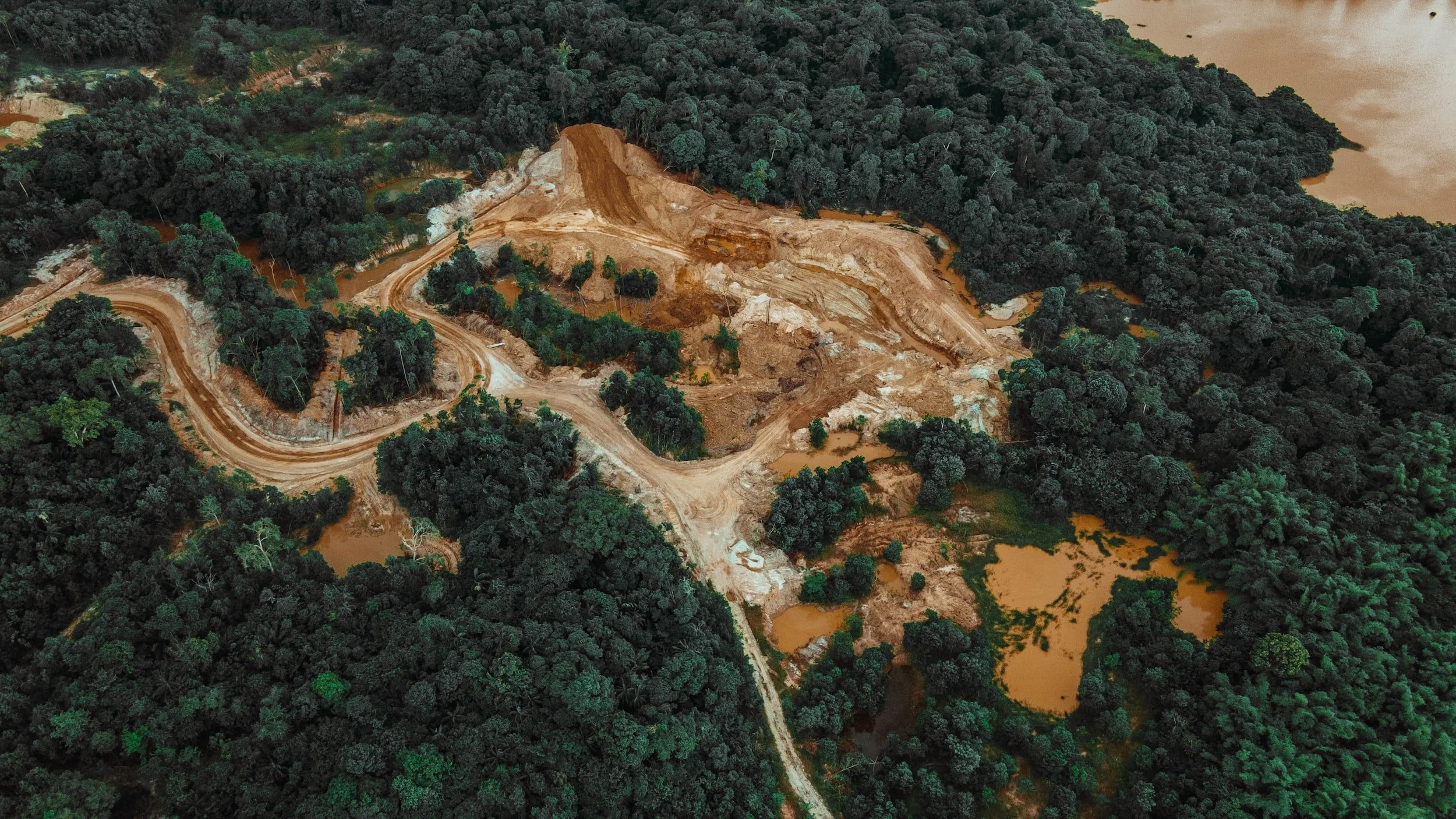
Cerrejón’s open pit mine (Colombia)
BHP Group, Anglo American and Glencore were the joint owners of the Cerrejón coal mine in La Guajira, Colombia. The mining operations have led to the dispossession and displacement of 35 Wayúu Indigenous and Afro-descendant communities from their ancestral land, at times by brutal police evictions. Find out in our case study how a Business, Human Rights and Environment Act could have made a difference.

Uyghur forced labour in murky value chains - the Xinjiang Uyghur Autonomous Region (China)
Research has shown that dozens of international brands, including UK companies Marks & Spencer, Primark, River Island and Tesco are at risk of using cotton that is produced or processed by Uyghur forced labour. Companies have called for stronger laws, and a number of companies, including Marks & Spencer, have signed a “call to action” to remove their value chains from the region.

50 businesses sign statement calling for human rights due diligence legislation
50 businesses, including the British Retail Consortium, Tesco and Unilever, call on the UK government to urgently bring forward ambitious primary legislation to mandate companies to carry out human rights and environmental due diligence.

Corporate Justice Coalition: Time for change – MPs from across parties turn out for CJC event
At the end of May, CJC joined the All-Party Parliamentary Group on Human Rights to host the event “Levelling the playing field for UK companies: Mandatory supply chain due diligence to protect human rights and the environment” in Parliament.

Leicester’s sweat shops: abuses in Boohoo’s value chains (UK)
When the Sunday Times published an investigation alleging labour exploitation, deplorable working conditions, and illegally low rates of pay – as low as £3.50 an hour – in Leicester-based factories making clothes for Boohoo, it shocked the UK. Find out in our case study how a Business, Human Rights and Environment Act could have made a difference.

Kabwe: Anglo American’s lead poisoning legacy (Zambia)
For decades, the Kabwe mine was operated without adequate environmental safeguards, leading to lead contamination of the soil. Medical studies conducted over the past 45 years have shown extreme levels of lead in young children which has affected generations with lead encephalopathy and fatal lead poisoning. Find out in our case study how a Business, Human Rights and Environment Act could have made a difference.

Spyware: activists tortured (Bahrain)
Surveillance technologies such as FinFisher have been used as a means to exercise political control and to spy on activists, human rights defenders, journalists and dissidents to stifle political opposition and undermine democratic development. Find out in our case study how a Business, Human Rights and Environment Act could have made a difference.

Tesco’s value chain: exploitation and wage theft (Thailand)
Workers in Mae Sot face a weak rule of law, substandard wages and labour conditions, as well as employers denying workers the rights to join unions and exercise their rights to freedom of association and collective bargaining. Find out in our case study how a Business, Human Rights and Environment Act could have made a difference.

Barrick Gold: killings and violence against local communities (Tanzania)
The Kurya or Kuria people are the majority ethnic group of Tarime district. The mine severely impacted their way of life and they suffer from brutal violence. Find out in our case study how a Business, Human Rights and Environment Act could have made a difference.

Beef: human rights abuses, deforestation and land conversion on the menu (Brazil)
Indigenous communities in the Amazon are continuously battling for land ownership and land use rights. Workers at cattle ranches were forced to work 17 hours a day and were left to live in deplorable conditions. Find out in our case study how a Business, Human Rights and Environment Act could have made a difference.

British American Tobacco and Imperial Brands: child and forced labour on tobacco farms (Malawi)
Malawi is one of the top five tobacco leaf-producing countries in Africa. Farmers often work under exploitative and hazardous conditions. In certain tobacco producing regions, 57% of children are engaged in child labour on tobacco farms. Find out in our case study how a Business, Human Rights and Environment Act could have made a difference.

Shell’s impunity for destruction in the Niger Delta (Nigeria)
Over a number of decades, oil spills from Shell’s operations led to devastating environmental impacts with disastrous consequences for the local residents. The spills contaminated the communities’ land and waterways which they relied on for farming, drinking, and washing. Find out more details in our case study and how a Business, Human Rights and Environment Act could have made a difference.

Public procurement of tainted PPE (Malaysia)
Despite serious red flags concerning Supermax’s labour practices and ongoing investigations, NHS Supply Chain named Supermax an approved supplier in December 2021. The US Government had previously introduced import bans on Supermax products based on its finding of forced labour. Find out how a Business, Human Rights and Environment Act could have made a difference.

Investors support a Business, Human Rights and Environment Act
Investors representing £4.5 trillion in assets under management support a Business, Human Rights and Environment Act and make recommendations to the UK for robust legislation on mandatory human rights and environmental due diligence

4 in 5 of the British public support new laws to prevent exploitation of people in supply chains
Yaeno Fernandez Amano, Fellow at Anti-Slavery International, explores the latest polling results regarding modern slavery and supply chains.

Opinion on the UK Law Commission’s options paper including a criminal offence of failure to prevent human rights abuses
Opinion: The failure to hold to account criminally UK companies (and companies which operate in the UK and/or have UK listings) which are complicit in human rights abuses abroad stands in stark contrast to more promising developments in countries such as France, with the Lafarge case, and Sweden with the Lundin case.

Effectiveness of mandatory human rights due diligence
Policy briefing analysing the evidence base on the effectiveness of mandatory human rights and environmental due diligence.

UK efforts to reduce global deforestation undermined by ignoring indigenous peoples’ rights
Under Schedule 17 of the UK Environment Act, certain businesses will be required to prove that their products are “deforestation-free” and compliant with local laws, but respect for indigenous peoples’ and local communities’ rights – in particular their land rights - has not been expressly required.

New BIICL Report Looks at Preventing Human Rights Harms
As developments around mandatory human rights due diligence laws are taking place rapidly across Europe, the report considers the legal feasibility of introducing into UK law a corporate duty to prevent human rights harms.

New UK law won’t halt deforestation or protect human rights
Commodity supply chains are trashing forests and trampling human rights. Clare Oxborrow from Friend of the Earth explains why the government’s new Environment Act will fail to protect communities and why it must take effective action to regulate UK companies.